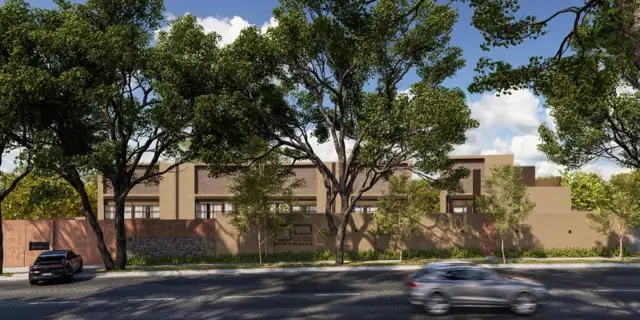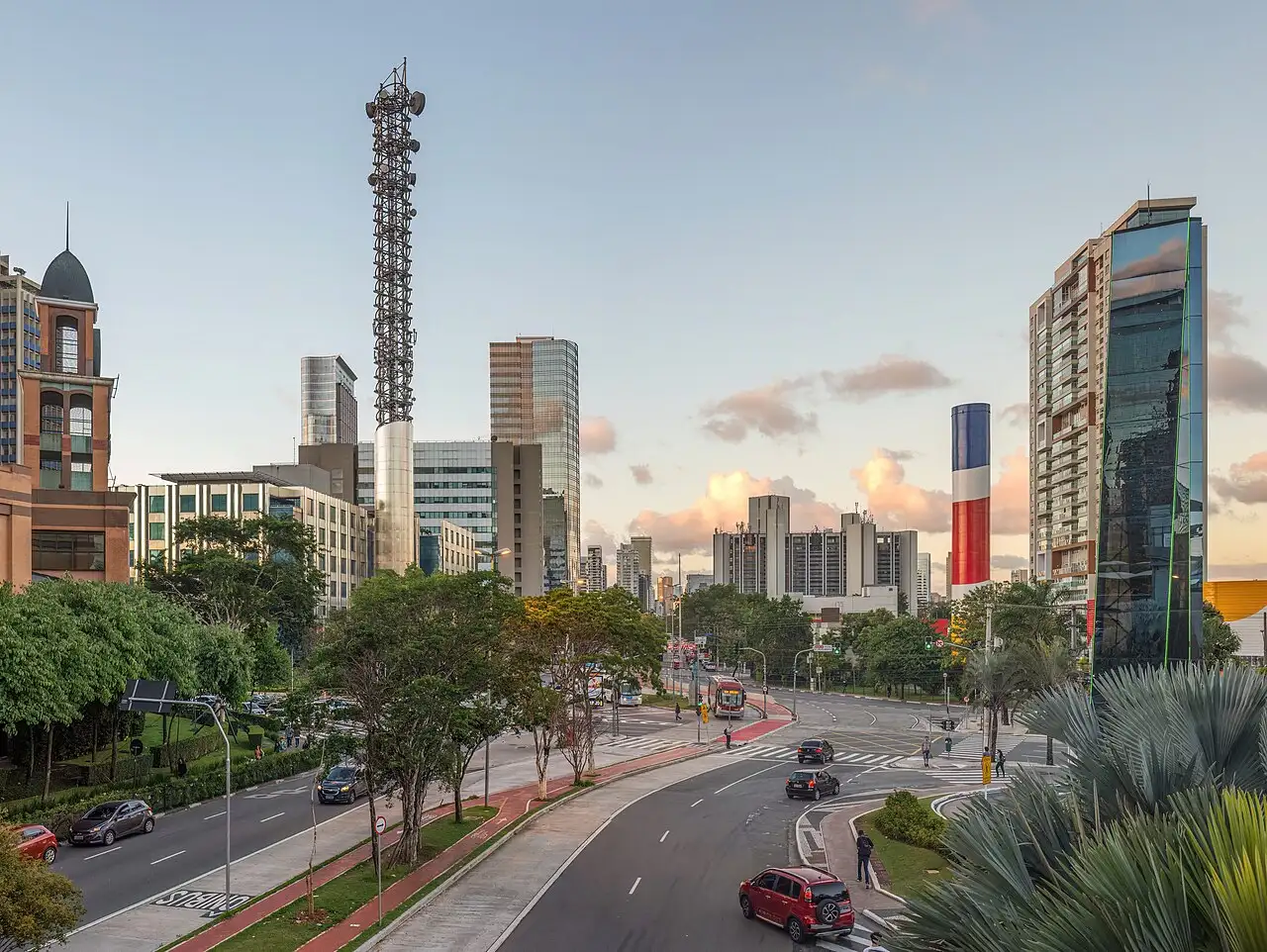
Morumbi is the neighborhood São Paulo associates with a house and garden, an international school and a reference hospital. On the west side of the Pinheiros River, its winding streets climb hills between high walls, gated communities and buildings with spacious floor plans, and are home to the Palácio dos Bandeirantes, Hospital Israelita Albert Einstein, the São Paulo Futebol Clube stadium and schools such as Graded and Porto Seguro. For families trading an apartment for a house without leaving the city, it is the first address to visit.
History and profile
The story begins in the 19th century, when Fazenda Morumby was granted to an English farmer who established Brazil's first tea plantation there; the estate's chapel and house, dating from 1813, were listed as heritage in 2005 and now host events. When tea production ended, the property was subdivided and, in 1948, by then in the hands of an engineer, development began with the sale of lots to high-income families.
Construction of the stadium, begun in 1952 and inaugurated in 1960, attracted developers, commerce and services, and the neighborhood grew during the 1950s and 1960s. In 1964 the State bought the building designed to be a university and turned it into the Palácio dos Bandeirantes, to which the seat of government moved in 1965.
Morumbi belongs to the Butantã Subprefecture and has a varied profile: streets of houses and gated communities, high-rise corridors along Avenida Giovanni Gronchi and Avenida Morumbi, and the neighboring Paraisópolis, the city's second-largest community, with more than 100 thousand inhabitants, which is part of the neighborhood's reality and of social projects such as the Programa Einstein na Comunidade, created in 1997.
Streets, greenery and services
Access is via the Morumbi and Cidade Jardim bridges, Avenida Morumbi, Avenida Giovanni Gronchi and the Marginal Pinheiros, where Morumbi Station on CPTM Line 9-Esmeralda is located. The neighborhood is about 15 km from downtown, and rush-hour traffic on the bridges is the main point of caution for those who work across the river.
Greenery is found in backyards, gated communities and clubs. The Jockey Club de São Paulo, in neighboring Cidade Jardim, with its 1941 racecourse, is the great open space in the vicinity, and since 2019 the City has been discussing a project to expand its public use. Neighborhood commerce is concentrated on Avenida Giovanni Gronchi and the streets around the Palácio, with supermarkets, bakeries and services; MorumbiShopping and Market Place, despite their names, are across the river in Brooklin, a bridge away.
Schools, health and well-being
Morumbi is the neighborhood of international schools. Graded, The American School of São Paulo, founded in 1920, has its campus at Avenida José Galante, 425, with an American curriculum, the IB and Advanced Placement. Colégio Visconde de Porto Seguro, of German tradition, runs its Morumbi campus at Rua Floriano Peixoto Santos, 55, and its Panamby campus at Rua Itapaiúna, 1355, with bilingual German-Portuguese instruction and the IB program planned at Panamby from 2026.
Colégio Santo Américo, at Rua Santo Américo, 275, in Jardim Colombo, and Colégio Albert Sabin, in Jardim Guedala, serve the area with Brazilian curricula. Avenues São Paulo, in neighboring Jardim Panorama, opened in 2018 with an integrated American and Brazilian curriculum.
For healthcare, Hospital Israelita Albert Einstein opened in 1971 at its Morumbi unit and in 1999 became the first hospital outside the United States accredited by Joint Commission International; in 2008 it performed the country's first robotic surgeries with the da Vinci system and in 2012 Brazil's first multi-organ transplant. A hub of medical offices and diagnostic clinics has formed around the hospital, and gyms line Avenida Giovanni Gronchi.
Entertainment and dining
Estádio Cícero Pompeu de Toledo, designed by Vilanova Artigas, inaugurated on October 2, 1960 and completed about ten years later, today welcomes about 70 thousand people for São Paulo Futebol Clube matches and international concerts, which energizes the surrounding dining scene and requires planning from those living on nearby streets on event days.
The Palácio dos Bandeirantes also operates as a palace-museum, open to visitors since the late 1970s, with a collection of about 4 thousand pieces from the 17th to the 21st century. Shopping Cidade Jardim, in the neighboring district, concentrates fine dining and luxury retail.
New developments and the real estate market
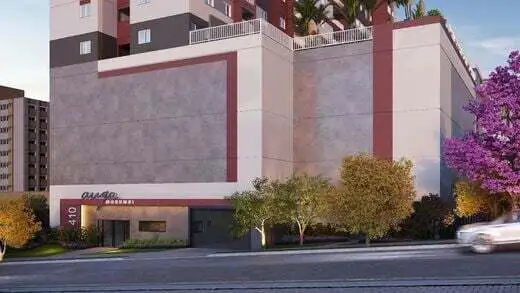
Morumbi is a market of houses and spacious apartments. Houses predominate, in gated communities and on public streets, on generous lots, alongside three- and four-suite apartments in buildings from the 1980s and 1990s, with floor areas that are now rare in neighborhoods across the river. High-end new developments are occasional, generally towers with few units per floor on Avenida Giovanni Gronchi and Avenida Morumbi and in Panamby.
Price variation from one street to the next is significant, and valuation requires a visit: the view, the topography, the proximity to the stadium and to high-traffic avenues, and the immediate surroundings weigh more than in flat neighborhoods.
In November 2026, listing portals show houses in Morumbi from 120 to more than 500 m² in ranges from about R$ 2.5 million to considerably higher figures, depending on the community and the lot, as well as spacious apartments. Morumbi does not appear among the ten most expensive square meters in the 2025 FipeZap ranking, which, combined with the larger floor areas, explains part of the neighborhood's appeal for families.
What to watch for: the chosen school and the commute to it, the security of the community or the street, the maintenance costs of large houses, exposure to stadium event routes and the time it takes to cross the bridges at rush hour. We serve Morumbi with partners in the neighborhood and with a direct comparison to Cidade Jardim, Panamby and Vila Andrade.
More in Neighborhoods
Sources consulted (8)
- Gazeta de S. Paulo — Morumbi, the Neighborhood That Grew Out of a Tea Farm (gazetasp.com.br)
- Gazeta de S. Paulo — Palácio dos Bandeirantes, 58 years of history (gazetasp.com.br)
- Hospital Israelita Albert Einstein — timeline (einstein.br)
- Jovem Pan — Morumbi, opened 65 years ago, an architectural landmark of São Paulo (jovempan.com.br)
- Colégio Visconde de Porto Seguro — campuses and addresses (portoseguro.org.br)
- International Schools Guide — international schools in São Paulo in 2026 (international-schools-guide.pages.dev)
- House listing in Morumbi (accessed in November 2026) (imovelweb.com.br)
- IstoÉ Dinheiro — the 10 most expensive neighborhoods in São Paulo (FipeZap 2025) (istoedinheiro.com.br)
Information verified on 01/11/2026. Found something outdated? Let our team know.