
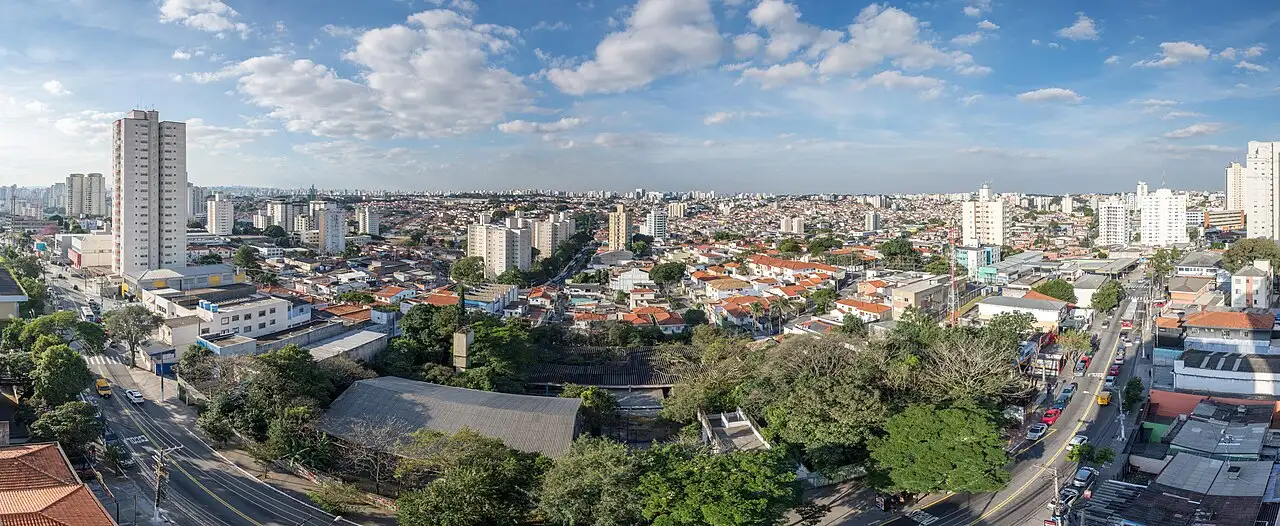

Buying a high-end property in São Paulo involves large sums, extensive documentation and taxes that must be factored in from the very first offer. This guide brings together, in order, what we verify with our clients: the decisions that come before the visit, the property and seller documents, ITBI and IPTU under the City Government's official rules, the differences between buying off-plan and buying move-in ready, and the costs that go beyond the price. It does not replace a review by an attorney, which we recommend for every purchase of this size.
Before the visit: the decisions that guide the search
Four questions shorten the search. First, the use: family home, a pied-à-terre near work or a rental investment. Second, school and work, which define the neighborhood more than any other criterion. Third, the timeline: those who need to move within months buy move-in ready; those who can wait a few years find more floor plan options in new developments. Fourth, the form of payment: cash, financing or a property swap, because each one changes the documentation and the schedule.
To choose the neighborhood, our region pages help you compare: the luxury core, Pinheiros and Alto de Pinheiros, the executive South Zone and Morumbi and Cidade Jardim.
Property and seller documentation
Before signing any commitment, we request and verify:
- Updated title record (matrícula) from the Real Estate Registry Office, showing the chain of owners, the area and any encumbrances, such as a mortgage, fiduciary lien, attachment or usufruct.
- Seller certificates: civil, labor and tax lawsuits and protested debts, to rule out the risk of the sale being challenged by creditors.
- IPTU status and the property's tax clearance certificate from the City Government.
- HOA fee clearance statement, signed by the building manager (síndico) or the management company.
- Recorded construction: the actual built area must match the area in the title record and in the municipal register. In houses, unrecorded additions are common and delay the deed and financing.
- Zoning restrictions: in heritage-listed neighborhoods, such as the Jardins, the original deed and Condephaat's rules limit uses and alterations; it is worth reading the Jardim Europa page and checking the street's zoning.
ITBI: rate and tax base
The Real Estate Transfer Tax (ITBI) is municipal and, in São Paulo, has a rate of 3% on the entire tax base for ordinary purchases. According to the City Government, the tax base is the higher of the transaction price and the reference assessed value assigned to the property by the City Government.
There is a reduced rate of 0.5% for purchases financed through the Housing Finance System (SFH), but it applies only to properties of up to R$ 725,808 and only to the financed portion, up to R$ 120,968, in 2026. In practice, it does not apply to the high-end segment.
Payment must be made before the public deed is executed; when the purchase is formalized by a private instrument, as in bank financing contracts, the deadline is ten days. For scale: on a R$ 5 million property, the ITBI is R$ 150 thousand.
IPTU: how it is calculated
Residential IPTU (property tax) is calculated at 1% of the assessed value of the property, and non-residential at 1.5%. On the resulting amount, the law applies discounts and surcharges by assessed-value bracket, bracket by bracket:
| Assessed value bracket (residential) | Discount or surcharge |
|---|---|
| Up to R$ 150 thousand | -0.3% |
| From R$ 150 thousand to R$ 300 thousand | -0.1% |
| From R$ 300 thousand to R$ 600 thousand | +0.1% |
| From R$ 600 thousand to R$ 1.2 million | +0.3% |
| Above R$ 1.2 million | +0.5% |
The assessed value used is the one in the municipal register, which usually differs from the market price; for this reason, the year's tax bill is the document that shows the actual amount due. Since 2026, the annual increase in the tax has been capped at 10%, for both residential and other properties. Before closing a deal, we request the year's tax bill and confirm there are no outstanding debts, which stay with the property.
Off-plan or move-in ready
| Criterion | Off-plan | Move-in ready |
|---|---|---|
| Timeline | Delivery in a few years | Immediate move-in |
| Payment | In installments during construction, with indexation | Cash or financed at purchase |
| Customization | Possible in some floor plans | Requires renovation |
| Risk | Construction delays, developer's financial strength | Condition of the property, condominium liabilities |
| What to check | Development registration, specifications, segregated assets (patrimônio de afetação) | Inspection, bylaws, meeting minutes, reserve fund |
When buying off-plan, three federal laws guide the analysis. Law 4.591, of 1964, requires the development to be registered at the Real Estate Registry Office before sales begin, with a descriptive specification and approved plans. Law 10.931, of 2004, created the segregated-asset regime (patrimônio de afetação), which separates the funds of each project from the developer's other accounts.
And Law 13.786, of 2018, the so-called Distrato Law, set rules for buyer withdrawal and for the delivery grace period, which must appear in the contract's summary table. When buying a move-in ready property, the focus shifts to the building: minutes of owners' meetings, approved works, the reserve fund and any lawsuits involving the condominium.
Costs beyond the price
- ITBI: 3% of the tax base.
- Deed and registration: notary and registry fees, set by a state schedule and proportional to the transaction value.
- Certificates and appraisal: a smaller cost, but one that adds up when there is financing and a bank appraisal.
- Renovation and moving: in high-end move-in ready properties, renovation can represent a significant share of the total investment.
- HOA fee and IPTU: become the buyer's responsibility from the date of possession; in towers with services, the HOA fee weighs on the monthly budget.
Asking price and closing price
Market indexes measure the advertised price. In Brooklin, for example, the listed sale price per square meter was R$ 14,649 in February 2026, while transactions recorded in the ITBI between October 2025 and March 2026 averaged R$ 8,439 per square meter.
The bases are different, but the gap shows that the asking price is the starting point for negotiation. In the segment above R$ 2 million, the market is selective: in the second quarter of 2026, sales fell 51.1% year over year, while the price per square meter of units above R$ 5 million rose 11.8%. Well-located, well-maintained properties continue to appreciate; the rest call for negotiation.
We at Grando Soluções Imobiliárias accompany every step with local partners and with the legal support the purchase requires, from the first visit to the registration of the deed.
More in Real Estate Market
Sources consulted (8)
- Prefeitura de São Paulo — ITBI: cálculo do imposto (prefeitura.sp.gov.br)
- Prefeitura de São Paulo — ITBI: prazo de pagamento (prefeitura.sp.gov.br)
- Legislação Municipal de São Paulo — Lei 6.989/1966 (IPTU) (legislacao.prefeitura.sp.gov.br)
- Legislação Municipal de São Paulo — Lei 15.889/2013 (faixas do IPTU) (legislacao.prefeitura.sp.gov.br)
- Prefeitura de São Paulo — Cálculo do IPTU (prefeitura.sp.gov.br)
- Exame — Price per m² in Brooklin and Vila Olímpia reaches Leblon and Ipanema (Feb. 2026) (exame.com)
- Portas — Property price in Brooklin based on ITBI transactions (portas.com.br)
- BNews SP — Neighborhoods with the most luxury apartments (Brain, Q2 2026) (bnewssaopaulo.com.br)
Information verified on 01/11/2026. Found something outdated? Let our team know.